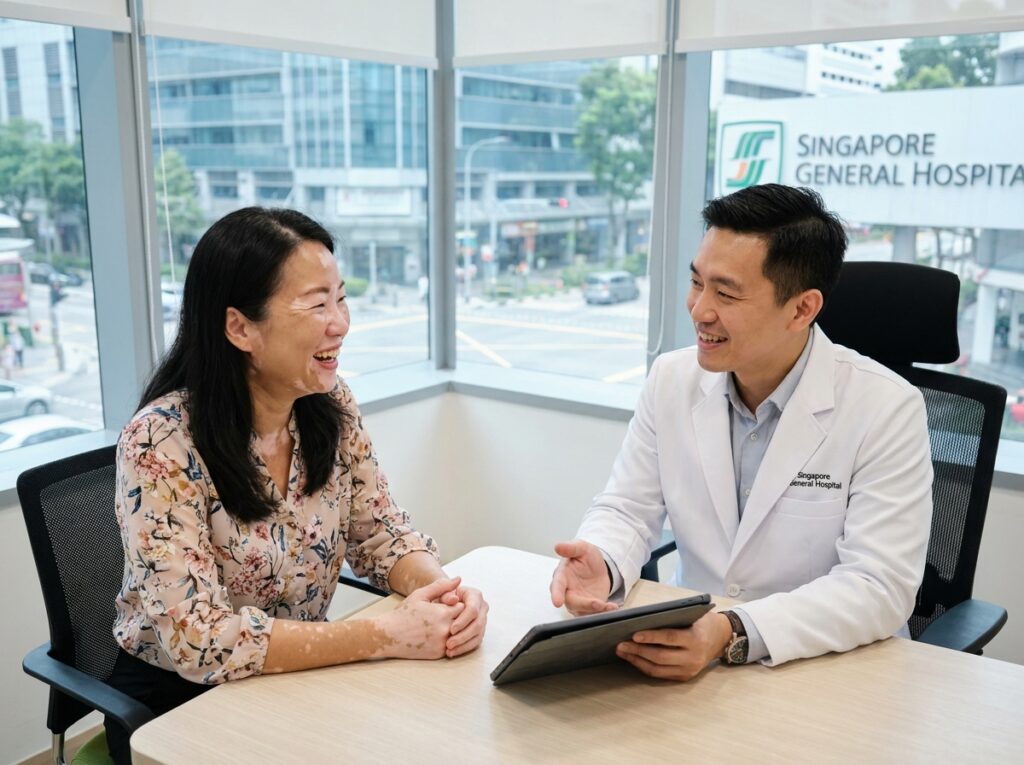
Vitiligo is a complex and visible skin condition that affects millions of people worldwide. While every person’s experience is different, advances in treatment mean there are more options than ever to help you manage your condition.
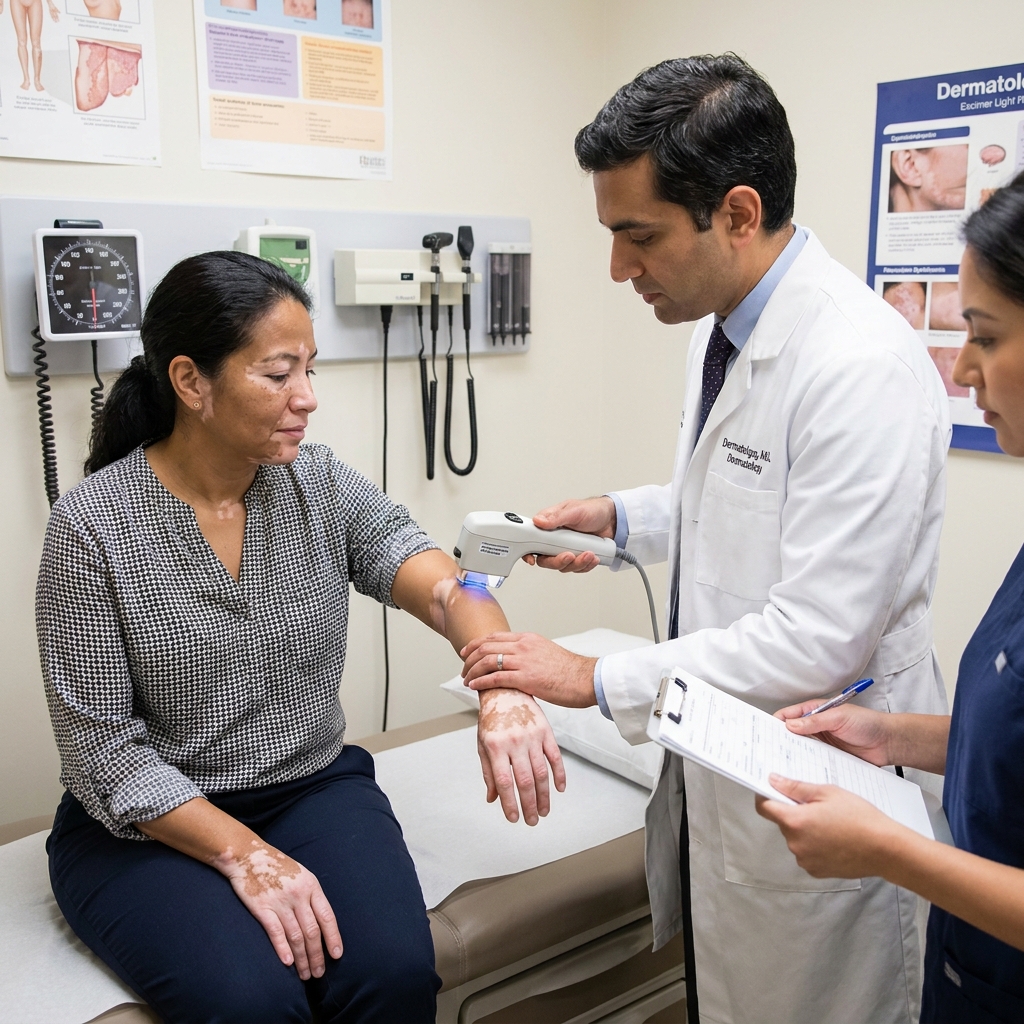
Vitiligo is a complex and visible skin condition that affects millions of people worldwide. While every person’s experience is different, advances in treatment mean there are more options than ever to help you manage your condition.
Results can vary significantly from individual to individual. One treatment may be effective for some, but not others. That’s why finding the right treatment, or combination of approaches, requires patience, consistency, and close collaboration with your dermatologist.
In 2026, patients in Singapore can access more effective, more affordable, and better-researched options than ever before.
This guide will help you understand what those treatment options are, how they compare, and how you can have a more informed conversation with your medical team about the right choice for you.
It also covers the emotional reality of living with vitiligo, which is just as important as the medical side. Due to the highly visible nature of the condition, many people with vitiligo experience low self-esteem, anxiety, and social isolation. Alongside medical treatment, mental health and emotional well-being are a crucial part of holistic vitiligo care.
In the process of managing vitiligo, clinicians and researchers generally work with three goals in mind:
Vitiligo is an autoimmune condition in which the body’s immune system destroys its own melanocytes. These are the cells responsible for giving the skin its pigment, and when they are damaged, the affected areas lose their colour and appear as white or lighter patches on the skin.
When the vitiligo is active, new patches of depigmented skin can appear, and existing ones can expand. The priority of treatment is usually to stop or slow this process
Once the condition is under control, treatment goals shift to repigmentation, or to help restore skin colour in affected areas. This can be achieved by moving healthy melanocytes to depigmented patches to stimulate melanin production.
Even when repigmentation is successful, vitiligo can return. This is particularly true for non-segmental vitiligo (NSV), the most common form, which affects roughly 84% of people with the condition. NSV is triggered by a whole-body immune response, and can recur without warning, even after years of stability. This makes ongoing maintenance therapy an important part of treatment for many vitiligo patients.
When it comes to vitiligo treatment, “managing” rather than “fixing” is the best way to frame the process. As vitiligo is a condition people live with for years, treatment also becomes a long-term commitment rather than a single process. The best outcomes come from working consistently with a dermatologist who understands your condition well.
Topical therapies are creams or ointments directly applied to the skin. These are usually the first line of treatment for vitiligo, as they are convenient, can be used at home, and are less risky than oral medications. Topical therapies are most effective for vitiligo on the face and trunk, and less so for the hands and feet.
Corticosteroids (steroid creams) are one of the most commonly prescribed topical treatments for vitiligo, especially for adults. This cream works by suppressing inflammation at the site of application, which helps reduce the immune attack on melanocytes and stabilise the spread of vitiligo.
Calcineurin inhibitors are steroid-free prescription creams that work similarly to corticosteroids, by suppressing immune activity locally. This makes them especially valuable for sensitive areas, such as the face, neck, and around the eyes, and for long-term maintenance therapy.
Ruxolitinib cream is the first FDA-approved topical therapy for non-segmental vitiligo. It is indicated for use by adults and children aged 12 and older. As a steroid-free treatment, Ruxolitinib cream is particularly suitable for delicate and sensitive areas of the skin.
Ruxolitinib blocks the signalling pathways in the immune system that trigger melanocyte destruction, stabilising vitiligo and even promoting repigmentation in affected areas.
Do note that Ruxolitinib cream is not yet approved for vitiligo treatment in Singapore, and is not available for sale via standard channels. However, select eligible patients may be able to access it via the Health Science Authority’s (HSA) Special Access Route (SAR).
Phototherapy is one of the most widely used and best-studied treatment types for vitiligo. By using specific wavelengths of ultraviolet light, phototherapy gives many patients a promising path to repigmentation of widespread vitiligo.
NB-UVB is considered the workhorse of vitiligo phototherapy, and the standard first-line choice for widespread or generalised disease. It uses a specific wavelength of UV light (311–313 nm) on the patient, while they stand in a full-body UV cabinet.
Sessions typically take place two to three times a week, and initially last only for a minute or two. The exposure time may increase gradually based on the skin’s response to treatment. Meaningful results may take several months to appear, and the full narrowband UVB course could last 12 to 18 months or longer.
NB-UVB has largely replaced PUVA (see below) for most vitiligo patients, thanks to its better efficacy, more accurate colour match on repigmented skin, and a cleaner safety profile.
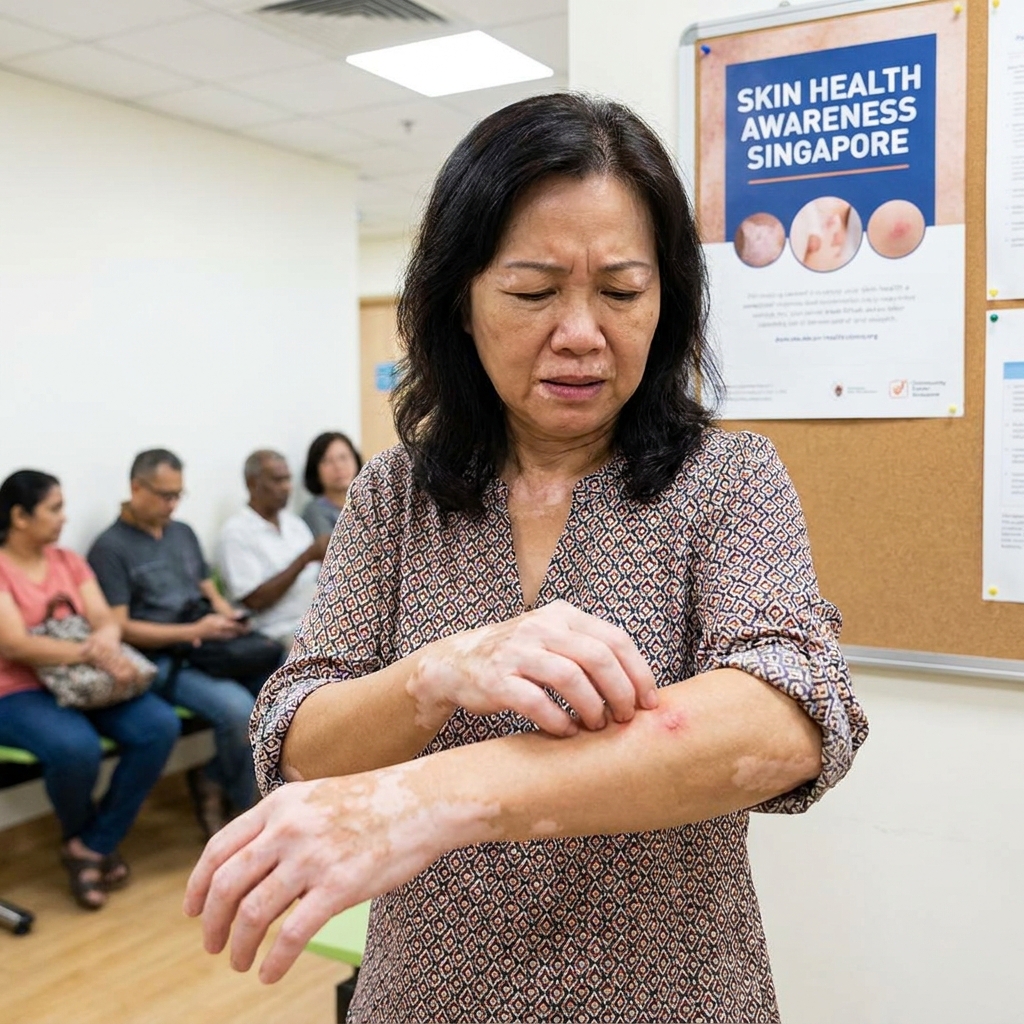
The excimer laser, and the lower-intensity excimer lamp, deliver targeted rays of UV light at exactly 308 nm. This wavelength is considered one of the most effective for stimulating melanocyte recovery and melanin production.
Because excimer lasers are targeted, they are ideal for smaller, localised patches as opposed to widespread vitiligo. It is typically the first-line approach for segmental vitiligo, which only affects one part of the body and responds well to early intervention.
PUVA was once a common form of phototherapy for vitiligo. Before the patient is exposed to UVA light, they take a psoralen drug (oral or topical). This drug makes the skin more sensitive to UV rays during treatment sessions.
Despite its effectiveness, PUVA has largely been replaced by NB-UVB treatment, which is more effective and shows better colour matching in repigmented skin patches. NB-UVB also does not carry the same risks as psoralen, which has side effects including nausea and skin cancer resulting from long-term exposure.
Standard phototherapy is usually done in clinics and is considered the safest option, as a dermatologist will be present to manage your dose and monitor your response.
However, phototherapy requires at least two to three sessions per week for up to a year, presenting significant accessibility barriers for those who need to juggle work, childcare, and travel. As a result, home phototherapy units have emerged as a convenient alternative.
Home phototherapy units come in the form of small handheld lamps, larger panel lamps, or whole-body cabinet units. To use one, you must have a proper prescription from your dermatologist and a way to keep consistent records of treatment sessions.
Do not simply buy a phototherapy device online and use it through guesswork; without professional guidance, you run the increased risk of burning your skin.
If you’re considering home phototherapy for vitiligo treatment in Singapore, talk about your options with your dermatologist. Your clinic may be able to arrange supervised home phototherapy treatments.
Phototherapy sessions typically take place two to three times a week, for a period of 6 to 18 months. It’s important to have patience, as it can take time before you start seeing consistent results.
Vitiligo on the face and neck tend to respond the best to phototherapy, followed by the trunk, arms, and legs. The hands, feet, fingers, and toes show the most resistance to this type of treatment. In these areas, full repigmentation is less likely, although partial improvement can be possible.
Dermatologists use the VASI (Vitiligo Area Scoring Index) to measure the progress of phototherapy treatments. This tool systematically measures the spread of vitiligo and the degree of repigmentation on the skin. A 50% or more reduction in a patient’s total-body VASI (T-VASI) score is considered a major success.
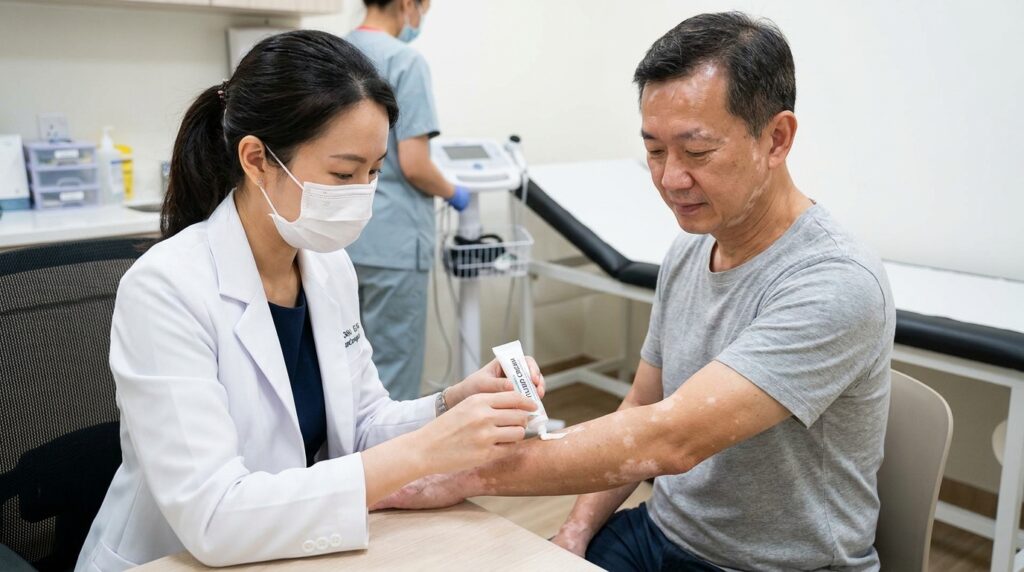
Phototherapy is often used as a combination approach in vitiligo treatment:
Treatments combining light therapy with topical creams are known to be more effective than phototherapy alone. If phototherapy is one of the treatment options you are currently considering, talk to your dermatologist about the possibility of combination treatments.
Phototherapy for vitiligo is generally safe, but not 100% risk-free. Some considerations include:
Some people may experience sunburn-like effects, including redness, itching, and peeling, from high doses of UV light. That’s why it’s essential to get treatment under medical supervision.
Always wear eye protection during phototherapy sessions. The clinic will provide goggles to shield your eyes from UV exposure.
Certain medications can make the skin extra sensitive to light and more prone to burning. Always tell your dermatologist about any medications you are taking to ensure your safety during phototherapy sessions.
Another concern is the long-term exposure to UV light. While standard vitiligo treatment durations do not significantly increase skin cancer risk, it’s still a concern for those who may need sessions for many years. Your dermatologist should factor in your total lifetime UV exposure to be safe.
If you have the following risk factors, be sure to talk to your dermatologist before starting any phototherapy treatment for vitiligo:
The JAK inhibitor class, the same mechanism behind ruxolitinib cream, is now being studied as an oral systemic treatment for vitiligo. The leading candidate as of early 2026 is upadacitinib.
Upadacitinib has shown highly promising results in Phase 3 Viti-Up clinical trials, with patients achieving at least 50% total-body repigmentation and 75% facial repigmentation. These results well surpass what topical treatments or phototherapy can reach on their own.
Beyond JAK inhibitors, more than 40 programmes are currently in development for vitiligo treatment. A notable example is anti-IL-15 therapies, which could potentially reset the immune system’s memory rather than just manage vitiligo symptoms.
However, oral JAK inhibitors have certain risks that topical JAK inhibitors do not. Because oral medication circulates throughout the body, patients could potentially develop serious infections, cardiovascular effects, and blood-clotting concerns. Rather than dismissing this class of treatment due to safety issues, it’s best to have a thorough conversation with a specialist about what would work best for you.
The main surgical technique is cell or tissue grafting, which involves harvesting healthy melanocytes and transplanting them to the affected skin. Outcomes of surgical treatments are promising, especially for vitiligo on the face and neck.
For individuals with very extensive vitiligo (affecting more than 50% of the body’s surface), depigmentation may be considered. Rather than attempting to restore pigment to the affected areas, this approach removes the remaining pigment from unaffected skin to create a more even tone across the body.
The result is permanent and may not be suitable for those who may develop spontaneous repigmentation over time or who wish to achieve it through other treatments.
While cosmetic camouflage and self-tanners aren’t medical treatments for vitiligo, they can make a significant difference to patients’ confidence and quality of life.
Cosmetic camouflage products include foundations, concealers, and body coverage products that can mask vitiligo patches. Classes and workshops are available to help teach patients to match products to their skin tones and use the best application techniques.
Meanwhile, self-tanners can temporarily darken white patches, reducing contrast with surrounding skin. These methods don’t replace medical treatments and can’t restore the actual pigment in skin, but can create a visual effect that helps people with vitiligo feel more comfortable and secure.
The right treatment for your vitiligo depends on several factors, and is best decided through a conversation with your dermatologist. Here are some considerations to help guide your choice:
If you have localised patches and a stable condition, topical treatments are usually the starting point. An excimer laser is an option for targeted phototherapy on smaller areas.
For widespread vitiligo, NB-UVB phototherapy, combined with a topical treatment, is usually the first-line treatment.
In cases of active vitiligo that is still spreading, treatment will prioritise stabilisation before repigmentation. Medications like oral JAK inhibitors may be the most appropriate treatment.
Vitiligo in the face and neck respond well to nearly all treatment types. Vitiligo in the hands and feet are usually the hardest to treat. Complete repigmentation in these areas is uncommon, so partial improvement is a realistic goal.
Vitiligo in children is common and manageable. Topical treatments and NB-UVB phototherapy are the most commonly used approaches.
Combination therapy is becoming the norm and tends to produce far better outcomes than individual treatment types. Ask your dermatologist about combination vitiligo treatments and whether they are right for you.
Most vitiligo treatments take up to six months to show meaningful results, and a full response could take a year or more. It’s important to commit to long-term treatment if it is working for you, even if it seems slow.
Insurance coverage for vitiligo treatment is available in Singapore, but it depends on the type of treatment and whether you are accessing it at private healthcare centres or public hospitals.
Some clinics may have readily available phototherapy options, while others may have long waiting lists. Other treatments, such as ruxolitinib cream, are currently not commercially available in Singapore, but may be obtained through the Special Access Route (SAR) if deemed appropriate by your doctor. When assessing vitiligo treatments, it’s important to know what’s available and accessible to you.
While the journey can be challenging, many people achieve meaningful improvements with the right treatment plan and consistent follow-up. Working closely with your dermatologist, setting realistic expectations, and remaining patient throughout the process can help you achieve the best possible outcome.
Treating the skin is only half the story when it comes to vitiligo.
The psychological and emotional impact of the condition is not about vanity or overreaction, but a real, well-documented medical issue. Vitiligo has a profound impact on how people see themselves, how they feel around others, and how they navigate their lives.
People with vitiligo describe a range of emotional experiences:
All of these are normal and legitimate responses for someone dealing with vitiligo.

Vitiligo’s emotional weight results from several factors.
Vitiligo is a highly visible condition. Changes in skin colour are often obvious not only to others but also to the individual every day.
Even after stable periods, new patches may develop, or existing ones may spread. This can make the person anxious about future changes and leave them feeling out of control of their body.
People with vitiligo are often asked questions or receive comments about their appearance. While these interactions are normally well-intentioned, repeatedly explaining the condition or responding to unwanted attention can be draining.
Society’s beauty standards prize clear and even skin. Although these are external expectations, they can influence how individuals perceive themselves and contribute to feelings of self-consciousness, particularly when vitiligo affects highly visible areas such as the face or hands.
One of the greatest comforts for vitiligo-related distress is connecting with others who have the same experiences. Support groups, online communities, and patient networks can provide reassurance, encouragement, and a sense of belonging.
When dealing with comments or questions from others, some people find it helpful to prepare a basic script or explanation about their vitiligo. Others may prefer not to discuss their condition at all. Deciding in advance how you would like to respond can help you feel more confident and in control of social situations.
Cosmetic camouflage products are a great way to even out skin tone and boost confidence in situations where you prefer less attention to your vitiligo. Choosing to use camouflage does not mean a lack of self-acceptance. Instead, it is simply an option that individuals can use according to their own preferences and comfort.
Living well with vitiligo does not mean feeling positive about the condition all the time. It is normal to have good days and difficult days. The best approach is to focus on what you control, celebrate progress, and remember that vitiligo does not define you or limit your ability to lead a fulfilling life.
Living with vitiligo can be emotionally challenging, and it is perfectly normal to experience periods of frustration, sadness, or self-consciousness.
However, do consider speaking to a healthcare professional if you experience any of the following for more than a few weeks:
Asking for support in these situations is a normal part of managing vitiligo and an important step in caring for your overall wellbeing.
In Singapore, the Vitiligo Support Group Singapore (VSG) is a community-led initiative dedicated to supporting people living with vitiligo.
We bring together patients, families, and supporters through educational resources, community events, and opportunities to connect with others who share similar experiences. Membership is free and open to anyone affected by vitiligo, whether you have recently been diagnosed or have been living with the condition for many years.
VSG provides educational resources, including makeup and camouflage technique workshops, community events, and opportunities to build meaningful connections with others affected by vitiligo.
Your dermatologist or GP can also refer you to appropriate psychological support services if needed. Approaches such as cognitive behavioural therapy (CBT) may help individuals manage the emotional challenges associated with living with a chronic skin condition.
Other options for mental health support in Singapore are also available:
While some individuals can achieve complete or near-complete repigmentation, others may require ongoing treatment to maintain their condition. The primary goal of treatment is to achieve stability, encourage repigmentation, and improve quality of life. With the right treatment plan, many people experience meaningful and lasting improvement.
The timeline will depend on the treatment and the individual. In general, noticeable improvement will only become noticeable after at least six months of consistent use. Treatments such as narrowband UVB (NB-UVB) phototherapy may require a year or more to achieve their full effect, while ruxolitinib cream has demonstrated progressively greater repigmentation over 6–12 months in clinical studies. Patience and consistency are important, as vitiligo treatment often takes time to produce visible outcomes.
Yes, even after successful repigmentation, vitiligo may recur. New patches may develop, particularly in cases of non-segmental vitiligo. Recurrence can also be triggered by factors such as stress in some individuals. Maintenance treatment, such as topical treatments or phototherapy sessions, may help reduce the risk of recurrence.
Many treatment options can be safely used in children under the supervision of a dermatologist. Topical creams, including Ruxolitinib cream, and NB-UVB phototherapy are among the most commonly recommended treatments for paediatric vitiligo.
Home phototherapy may be a suitable option for some individuals, particularly those who have difficulty attending regular clinic appointments. However, treatment should only be undertaken under the guidance of a dermatologist. A personalised treatment plan, including the appropriate doses, treatment schedule, and regular monitoring, helps maximise effectiveness while reducing the risk of burns and other complications.
NB-UVB phototherapy is generally considered safe for children and is widely used in the management of paediatric vitiligo. Treatment sessions are carefully tailored to the child’s age, skin type, and response to therapy, and appropriate eye protection should always be worn. Phototherapy for children should always be supervised by a dermatologist experienced in paediatric skin conditions.
Navigating vitiligo treatments is easier when you don’t have to do it alone. Connect with fellow patients, access educational camouflage workshops, and learn from lived experiences.
Membership is 100% free and open to all patients, parents, and supporters across Singapore.