
Living with vitiligo can look very different for different people. Maybe you’ve arrived at this page after noticing your first white patch and receiving a diagnosis. Perhaps you’ve been managing the condition for years and just need better ways to handle the emotional, social, and practical aspects of life with vitiligo.
Whatever brought you here, the first thing to know is that vitiligo is a common, manageable condition, and you can live a full, vibrant life with it.

Vitiligo affects roughly 0.5% to 1% of people worldwide. It’s not contagious, and usually not harmful to your physical health. However, it can impact how you feel about your appearance and how you navigate daily life.
There is no one correct way to live with vitiligo. Some people choose treatment that can restore skin colour, while others use makeup or self-tanner to camouflage patches. Some people may not want to undergo any treatment at all. Many change their minds at different times in their lives.
This guide covers what vitiligo is, how it is diagnosed, the available treatment options in Singapore, everyday skin care, the emotional side, and practical ways to handle questions or unwanted attention.
Vitiligo is a long-term skin condition characterised by white patches that have lost their pigment, or colour.
It is considered an autoimmune disease in which the body’s immune system destroys its own melanocytes, the cells that produce melanin. The result is patches of skin that are white or lighter than the surrounding skin.
The exact reasons behind this phenomenon are not yet fully understood, but science believes that genetics, immune system activity, and environmental factors all play a role.
Non-segmental vitiligo is more common, affecting up to 85% of the population. Patches usually appear on both sides of the body, on the hands, face, arms, legs, or other areas. This type of vitiligo can be stable for some time before flaring up again.
Segmental vitiligo is less common and typically affects only one area or one side of the body. It often develops more quickly at first before stabilising, although this can vary between individuals.
Vitiligo itself is not physically painful or dangerous, but it can occur alongside other autoimmune diseases, like thyroid disease and lupus. Getting a proper medical assessment is vital to ensure you get the right treatment.
If you’ve noticed new white or lighter patches on your skin that weren’t there before, getting them checked by a dermatologist is the best way to find out if you have vitiligo, or another skin condition that needs treatment.
The appointment is usually quite straightforward.
Your dermatologist will start by examining the size, shape, and distribution of depigmented patches. They will also ask you when the patches first appeared, whether they’ve changed, and look into your family history and any other health conditions you might have.
The doctor may use a Wood’s lamp as part of their examination. This is a special ultraviolet light device that causes vitiligo patches to glow bright white or blue-white, making them easier to identify. This is especially useful when the difference between affected and unaffected skin is subtle, or if the dermatologist suspects you may have a different skin condition.
Depending on the results of these examinations, blood tests may be recommended to look for certain autoimmune conditions linked with vitiligo, such as thyroid disease.
Occasionally, the dermatologist may want to confirm an uncertain diagnosis or rule out a different skin condition. In these cases, a skin biopsy may be required.
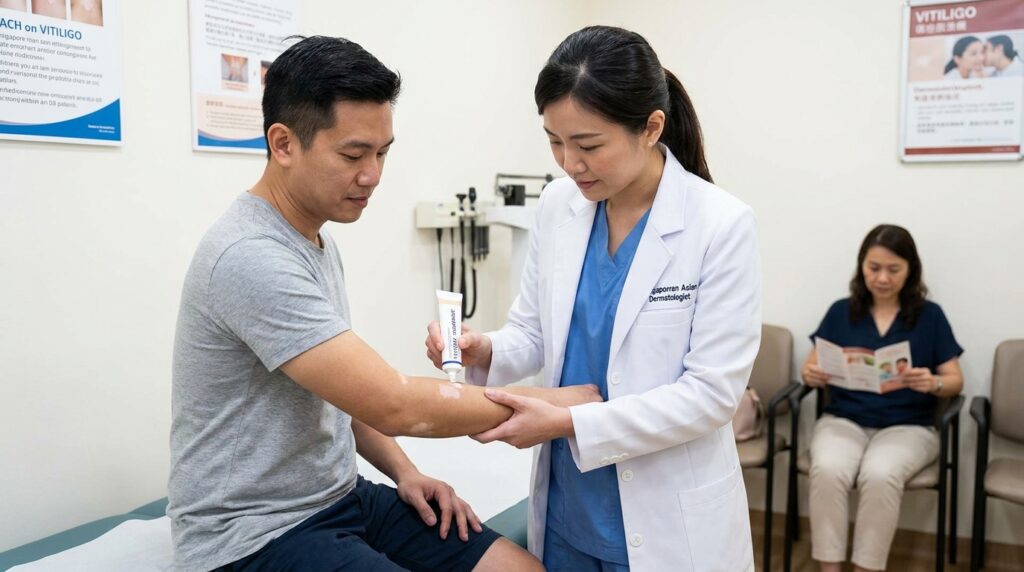
Before leaving the appointment, consider asking the doctor some of these questions to get a better idea of your condition:
You don’t need to pick a treatment type and start immediately. A useful first step is simply understanding your condition and learning about your options.
There is no one perfect treatment for everyone with vitiligo. Your dermatologist will take into account the type of vitiligo you have, how widespread it is, where it appears, your age and overall health, and how much the condition affects your day-to-day life.
Just as important to remember is that vitiligo treatment is a choice, not an obligation.
Some people may want to restore as much pigment as possible, while others prefer simple camouflage techniques. Plenty of people with vitiligo actually opt for no treatment at all. Your treatment decisions are personal and depend on what’s best for your specific situation.
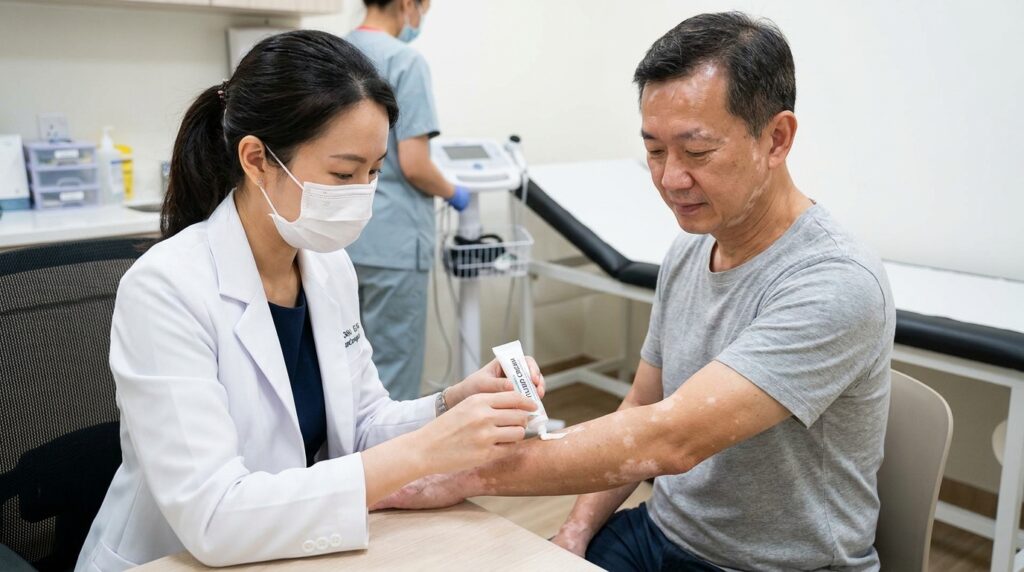
Prescription creams and ointments can be used to help slow vitiligo activity or encourage repigmentation.
Corticosteroids work by reducing inflammation and immune activity, while calcineurin inhibitors are often used to encourage repigmentation, particularly on areas such as the face and neck.
Ruxolitinib cream is a topical JAK inhibitor and is currently FDA-approved in the United States for non-segmental vitiligo in adults and children aged 12 and older. It is not yet commercially available in Singapore, but may be available through the HSA’s Special Access Route, via a licensed dermatologist or specialist clinic.
It can take several months to see visible results from topical treatments, so patience is key. Availability and approved uses also vary from country to country, so your dermatologist is the best source for information about what is currently available in Singapore.
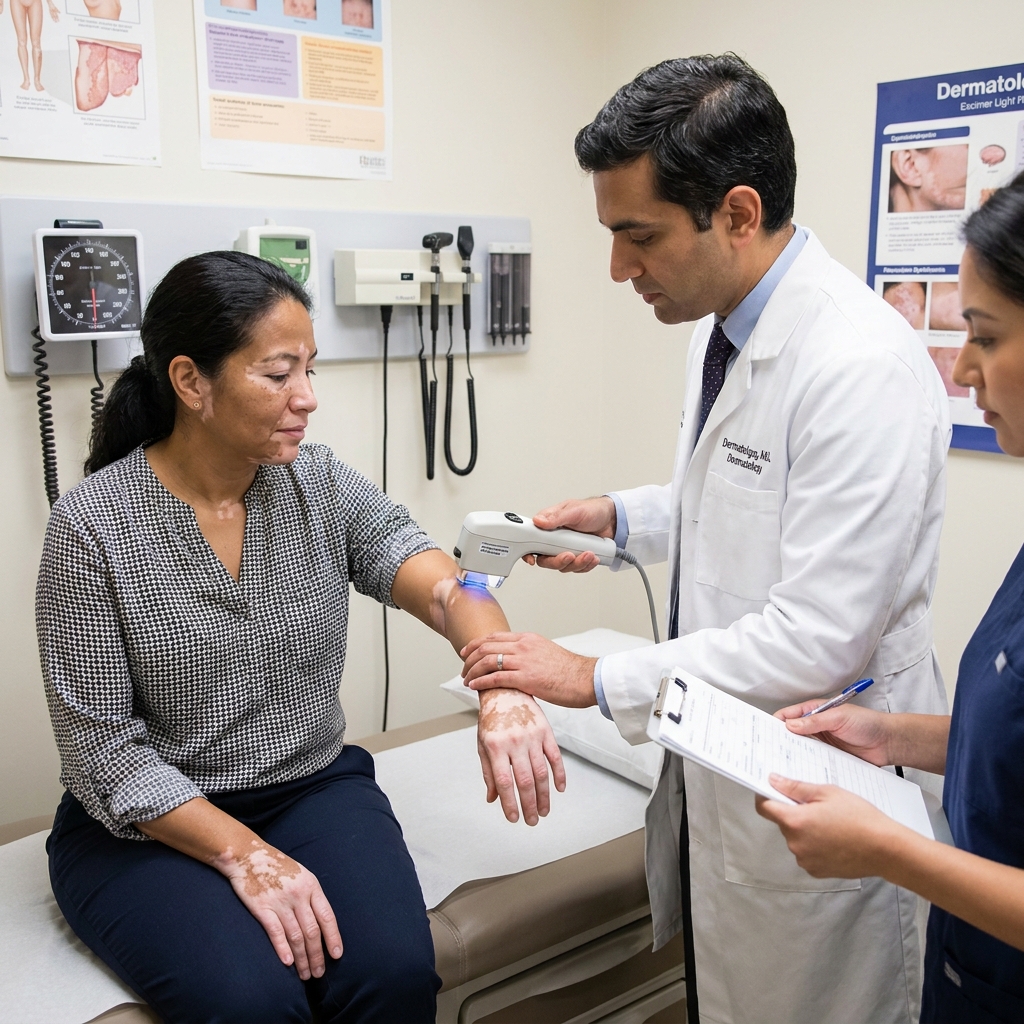
Light-based treatment for vitiligo can help restore pigment by stimulating melanocytes and their pigment-producing processes.
Narrowband UVB (NB-UVB) is one of the most widely used phototherapy options for vitiligo. Treatment usually involves several sessions per week across a period of months. The exact timeline will depend on your treatment plan and how your skin responds.
For smaller patches or more localised areas, your dermatologist may recommend an excimer laser, which delivers highly targeted treatment to affected skin.
Overall, the face and neck generally respond better to phototherapy compared to the hands and feet, where repigmentation can be more difficult.
Research into vitiligo treatment continues, particularly in medicines that target and block specific immune pathways.
Examples include oral JAK inhibitors for those with more active or extensive vitiligo. However, this drug class is not yet widely approved as a vitiligo treatment in Singapore and many other parts of the world. Its use will depend on the regulatory status over time.
For people with stable vitiligo, surgical approaches can be an option. These include procedures that transplant healthy, pigment-producing skin cells or tissue into depigmented areas.
Surgery is generally not recommended when vitiligo is actively spreading because new patches may still be developing.
See the full guide for more information on the different types of vitiligo treatment.
Medical treatment is only one part of the picture when it comes to living with vitiligo.
Cosmetic methods, including camouflage makeup, body makeup, and self-tanners, can reduce the contrast between depigmented patches and surrounding skin. Some people use them every day, while others apply them for weddings, holidays, work presentations, or other occasions when they want extra coverage and confidence.
For those with very extensive vitiligo that has resulted in the loss of most natural skin pigment, depigmentation can be considered. This procedure removes remaining pigment so the skin looks more uniform in tone. This is typically a permanent process, so it requires plenty of careful thought and discussion with a skin specialist.
Finally, you can choose not to treat or cover your vitiligo at all.
Treatment decisions should be based on what you want, what is medically suitable, and what fits your individual lifestyle.
In Singapore, medical care for vitiligo is accessible through both public institutions and private dermatology clinics. For subsidized consultations and treatments, the standard route is obtaining a referral letter from a Polyclinic to the National Skin Centre (NSC) or restructured hospital dermatology departments.
For detailed guides on clinical treatment costs, subsidy structures, and insurance realities, explore our dedicated resources:

Living with vitiligo does not require a complicated daily routine.
Consistently following a few good habits is a much more beneficial approach. Simply take the right steps to protect your skin, reduce avoidable irritation, and follow your treatment plan.
Depigmented skin has little to no melanin, so it lacks natural UV protection. This means vitiligo patches will burn much faster than the surrounding skin.
Apply broad-spectrum SPF 30–50 sunscreen on exposed areas of your skin every day. Reapply when you’re spending extended time outdoors, especially after swimming, sweating, or towel drying.
Other ways to reduce UV exposure are wearing UPF-rated clothing, using wide-brimmed hats, and staying in the shade when UV levels are high.
If you have vitiligo, it’s important to minimise sun exposure for another reason: skin trauma. Damage to the skin, including sunburns, can trigger the formation of new vitiligo patches in some people through the Koebner phenomenon.
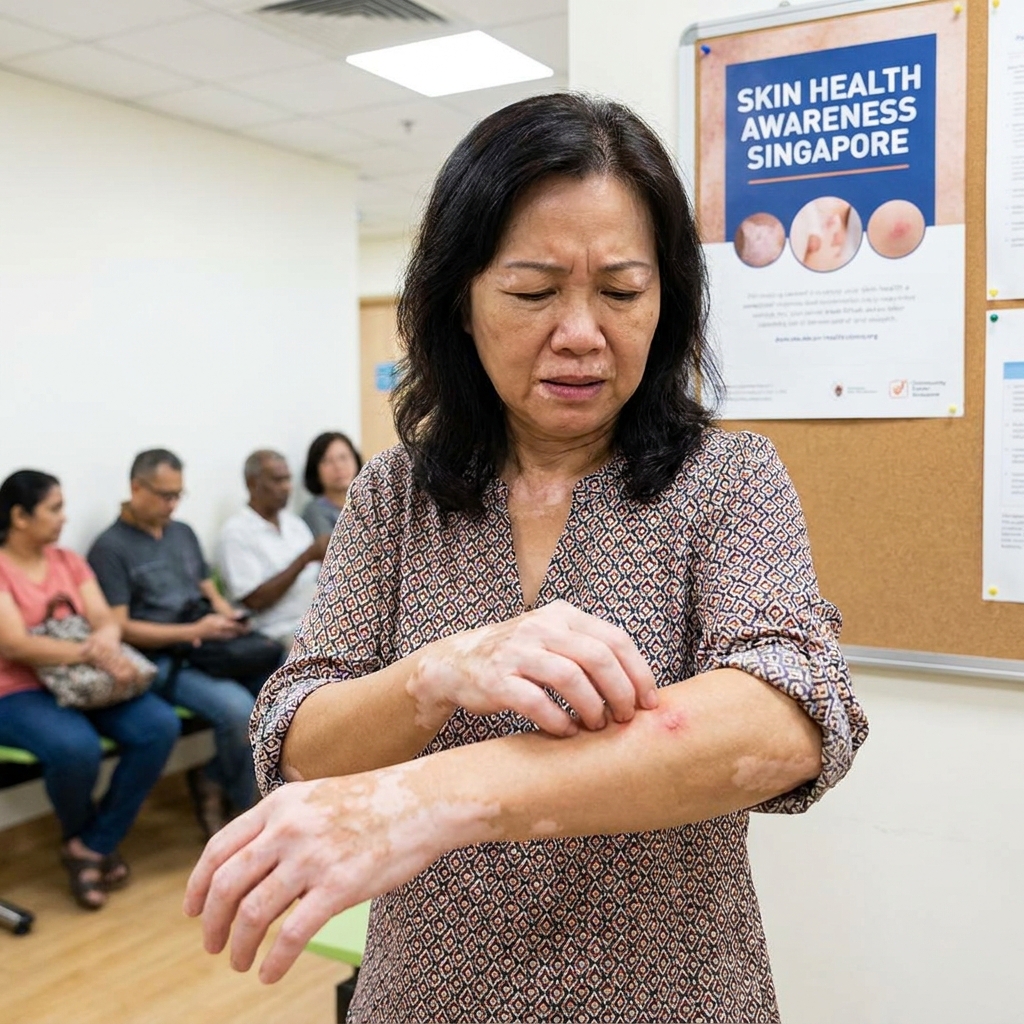
The Koebner phenomenon refers to the development of new vitiligo patches at the sites of skin injury or trauma. This doesn’t happen to everyone with vitiligo, and not every injury will trigger the phenomenon, but it’s best to reduce unnecessary skin trauma as a precaution.
For instance, consider choosing a better-fitting bra if the straps repeatedly rub against the same patch of skin, or switching shoe sizes or styles if they constantly cause friction on your feet.
Additionally, be gentle when shaving, and avoid aggressively rubbing your skin when showering or cleansing.
You may also wish to think twice about cosmetic procedures that intentionally injure the skin, like getting tattoos or chemical facials. Do discuss the risks and concerns with your dermatologist beforehand.
It’s natural to want some form of control when you’re living with an unpredictable condition like vitiligo. Many people focus on finding the best diet for vitiligo, or seek out specific vitamins for the condition.
However, there is currently no proven diet or supplement that can treat or repigment vitiligo.
All the same, your overall health is still important. A balanced diet, regular physical activity, and adequate sleep are all worthwhile habits to maintain, whether or not you have vitiligo.
Anti-inflammatory diets, featuring plenty of fruits, vegetables, whole grains, and lean meat, are highly beneficial for autoimmune conditions like vitiligo, while Vitamin D, found in eggs and fatty fish, help support the immune system.
Those with vitiligo also tend to have lower-than-average Vitamin D levels. Consider speaking with your doctor about whether supplements may be necessary for you.
Be very careful about dietary products or supplements that promise to treat or even reverse vitiligo naturally. A long ingredient list or a high price does not make a product effective, or a substitute for medical treatment and a healthy lifestyle.
Managing the skin is only half of living with vitiligo.
For many people, the emotional impact of the condition can be just as profound as the physical changes. You may feel self-conscious about being seen in public, having your photo taken, wearing certain clothes, going swimming, or meeting new people. You may dread the idea of strangers staring or asking questions.
None of this is vanity or a sign that you care too much about appearances. The psychological impact of vitiligo is a real and important part of this condition.
It can take time to process a vitiligo diagnosis.
At first, you may spend hours researching the condition and checking your skin for changes. It can be a relief to finally have an answer for what has been happening to your body, while simultaneously feeling anxious and afraid of what’s next.
Accepting a vitiligo diagnosis can be very similar to grief. Feelings of denial, anger, frustration, and sadness are all perfectly normal responses in this situation.
You don’t have to force yourself to “love” your vitiligo. Eventually, you can reach a stage of acceptance with your condition. At this point, your skin will just feel like a part of you, and not something that controls your life.
One of the most frustrating parts of living with visible vitiligo is dealing with other people’s reactions.
Some people will stare or ask questions out of curiosity, while others may do so without realising they are being rude or invasive. Often, children will ask direct questions without intending to offend.
You don’t owe anyone an explanation, but having a few prepared response scripts in your pocket can make these situations less daunting.
Seeing other people with vitiligo in public life can make a big difference for your own sense of confidence.
There are many models, actors, athletes, and public figures with vitiligo who have helped make the condition more visible over the years. These people can be a reassuring reminder that there’s no “right” way to look, feel, or live when you have vitiligo.
However, it’s important to remember that representation shouldn’t make you feel pressured. Someone else proudly showing their patches doesn’t mean that you need to stop covering yours.
Covering and showing your skin can both be confident choices. It all depends on the individual.

Sometimes the emotional side of living with vitiligo can become challenging to handle on your own.
Reach out to a doctor, counsellor, psychologist, or other mental health professional if you find yourself:
Asking for support isn’t a sign of weakness or failure. It is simply another way of taking care of yourself.
Vitiligo can occur at almost any age, and the emotional and practical struggles can be different depending on your life stage.
For children and teenagers, confidence and social support are especially critical. Parents can support their kids by answering questions honestly, working with teachers and schools when necessary, and avoiding language that suggests the child’s skin needs to be “fixed” or corrected.
A dermatologist can also help both children and parents understand the appropriate treatment options for their age.
For adults diagnosed later in life, vitiligo can come as a shock, particularly if you’ve never experienced noticeable changes in your skin or appearance before.
The condition can change your established routines, relationships, work commitments, and thoughts about your identity and appearance. The process of adjusting to new patches and treatments can be challenging.
No matter your age, the same principle applies to anyone facing vitiligo: you don’t need to navigate every aspect of the condition immediately, or at once. Whether it’s researching treatment options or dealing with feelings about your appearance, start with the issue that matters most to you now.
Living with vitiligo often comes with questions that don’t have straightforward answers.
You might want to know how someone else responded to a treatment, which sunscreen actually works on your skin tone, or how people handle comments from strangers. These are the day-to-day realities of living with vitiligo that a doctor’s appointment may not always cover.
That’s where connecting with other people with vitiligo can help.
The Vitiligo Support Group brings together people from all over Singapore who are going through the same thing you are. Ask each other questions, share experiences, and get tips on managing treatment, skin care, mental health, and everyday situations.
While medical advice should always come from your healthcare team, connecting with people who face the same challenges can help you feel more informed, confident, and supported.
Membership in the Vitiligo Support Group is free and open to anyone affected by the condition, whether you have recently been diagnosed or have been managing it for years.
We provide educational resources, including makeup and camouflage technique workshops, community events, and opportunities to build meaningful connections with others affected by vitiligo.

Yes. Vitiligo is a chronic condition that changes the colour of parts of your skin, but it does not prevent you from working, studying, travelling, exercising, having relationships, or taking part in everyday activities. You may need to take extra care with sun protection, and some people choose treatment or camouflage, but vitiligo does not have to limit your life.
Not necessarily. Vitiligo can become more widespread over time, remain stable for long periods, or become active again after a stable period. Age itself does not determine whether vitiligo will spread. If you’re noticing new patches or changes in existing patches, speak with your dermatologist.
No, vitiligo usually does not disappear permanently without treatment. In some people, patches may partially or completely repigment on their own, but this is unpredictable. Treatment can encourage repigmentation or help stabilise the condition, but results vary, and repigmentation may fade over time.
Genetics can play a role in vitiligo, but it is not a directly inherited condition. Having a parent or close relative with vitiligo can increase your risk, but most children of people with vitiligo will not necessarily develop the condition. Multiple genes and other factors are thought to contribute to this likelihood.
There is no single vitamin or mineral deficiency known to cause vitiligo. Vitiligo is considered an autoimmune condition in which the body’s immune system targets melanocyte cells. Some people with vitiligo may also have nutrient deficiencies, but correcting that deficiency does not treat the vitiligo itself. If you are concerned about your nutrition or vitamin levels, speak with your doctor about what diet changes or supplements may be necessary.
Tattooing over vitiligo is possible, but it carries a significant risk for people with vitiligo. Tattooing deliberately injures the skin, and in people who are prone to the Koebner phenomenon, skin trauma can sometimes trigger new vitiligo patches. If you’re considering a tattoo on or near affected skin, discuss the risks with your dermatologist first.