
To understand how ruxolitinib works, it helps to understand how vitiligo itself occurs.
Vitiligo is an autoimmune condition in which the patient’s immune system mistakenly targets and destroys melanocytes. These are the cells that give skin its colour by producing melanin.
This attack response is mainly triggered by the JAK-STAT signalling pathway, specifically involving the cytokines interferon-gamma (IFN-γ) and interleukin-15 (IL-15). These cytokines activate immune cells to find and destroy the body’s own melanocytes.
Ruxolitinib works by selectively interfering with the JAK1 and JAK2 enzymes in this pathway. By blocking them:
Unlike many earlier treatments, ruxolitinib not only stops the depigmentation process, but also directly supports repigmentation.
In clinical studies for ruxolitinib, 50% of patients achieved at least 75% facial repigmentation by 52 weeks. This is a remarkably significant result not previously seen with topical agents for vitiligo treatment.
Ruxolitinib cream is applied twice daily to affected areas of the skin. It works best on the face and areas with a high density of hair follicles, as these are where melanocyte stem cells are stored. It may be less effective on areas such as the hands and feet, and on skin which has been depigmented for many years.
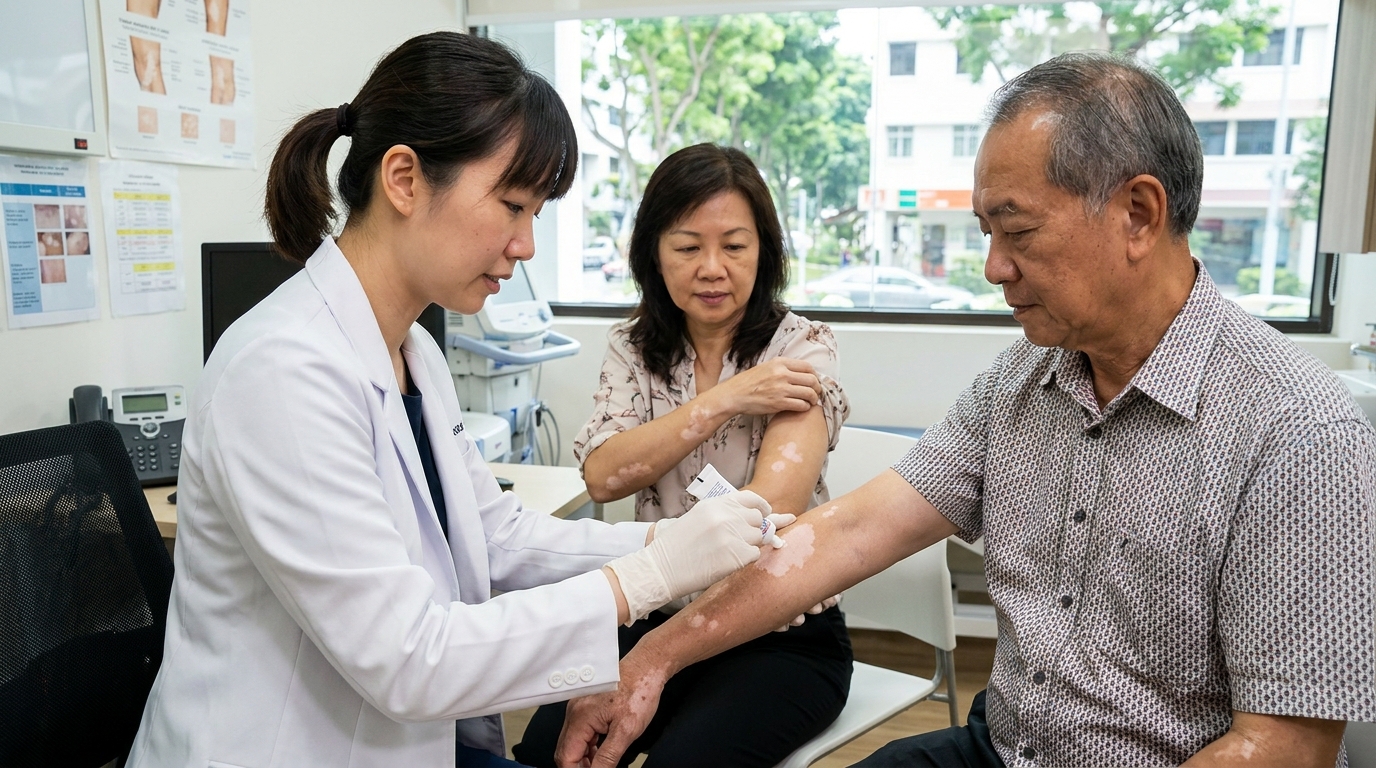
Singapore’s Health Sciences Authority (HSA) regulates the import and supply of therapeutic products. Drugs that are not commercially registered in Singapore through the HSA cannot be sold through standard pharmacy channels.
However, HSA recognises that some patients have a genuine or urgent medical need for drugs that are not yet registered.
The Special Access Route (SAR) was set up to allow licensed healthcare professionals to supply such products on a patient-specific, case-by-case basis for Singaporeans.
There are two main pathways under the SAR:
While Ruxolitinib cream is currently not commercially available in Singapore, certain eligible patients may be able to access the medication through the Health Sciences Authority (HSA) Special Access Route.
Patients considered for access are typically those with a confirmed diagnosis of non-segmental vitiligo, which is the subtype more commonly related to autoimmune activity. The patient must also have a record of poor response to other treatments, including topical corticosteroids and phototherapy. Eligibility and suitability for the HSA Special Access Route will be evaluated on an individual basis by the treating dermatologist.
If you are interested in learning whether ruxolitinib cream may be a viable treatment option for your condition, speak with your dermatologist for further guidance on navigating the HSA Special Access Route.
Ruxolitinib can only be prescribed by a licensed doctor, ideally a dermatologist with experience in vitiligo treatment.
In Singapore, the National Skin Centre (NSC), Singapore General Hospital (SGH), National University Hospital (NUH), and private specialist clinics are some places you can visit for a consultation.
Once your diagnosis of non-segmental vitiligo is confirmed, your doctor will review your history of prior treatments and your responses to them.
If there is evidence of your vitiligo having responded poorly to other treatments, you are more likely to qualify for the SAR for ruxolitinib.
Your doctor will discuss the potential benefits of the ruxolitinib treatment, realistic expectations, risks, and any out-of-pocket costs. You will be asked to provide informed consent for the treatment.
Your doctor will submit the SAR application to HSA. Processing times for your application can vary, but there is a good chance of approval if your condition has been well-documented.
Once approved, the ruxolitinib cream is dispensed to you through the hospital pharmacy or clinic. You will be advised on the correct application technique and any potential side effects you should be aware of.
You will need to attend regular follow-up appointments so that your doctor can assess your response to the treatment, adjust it as needed, and monitor you for side effects.
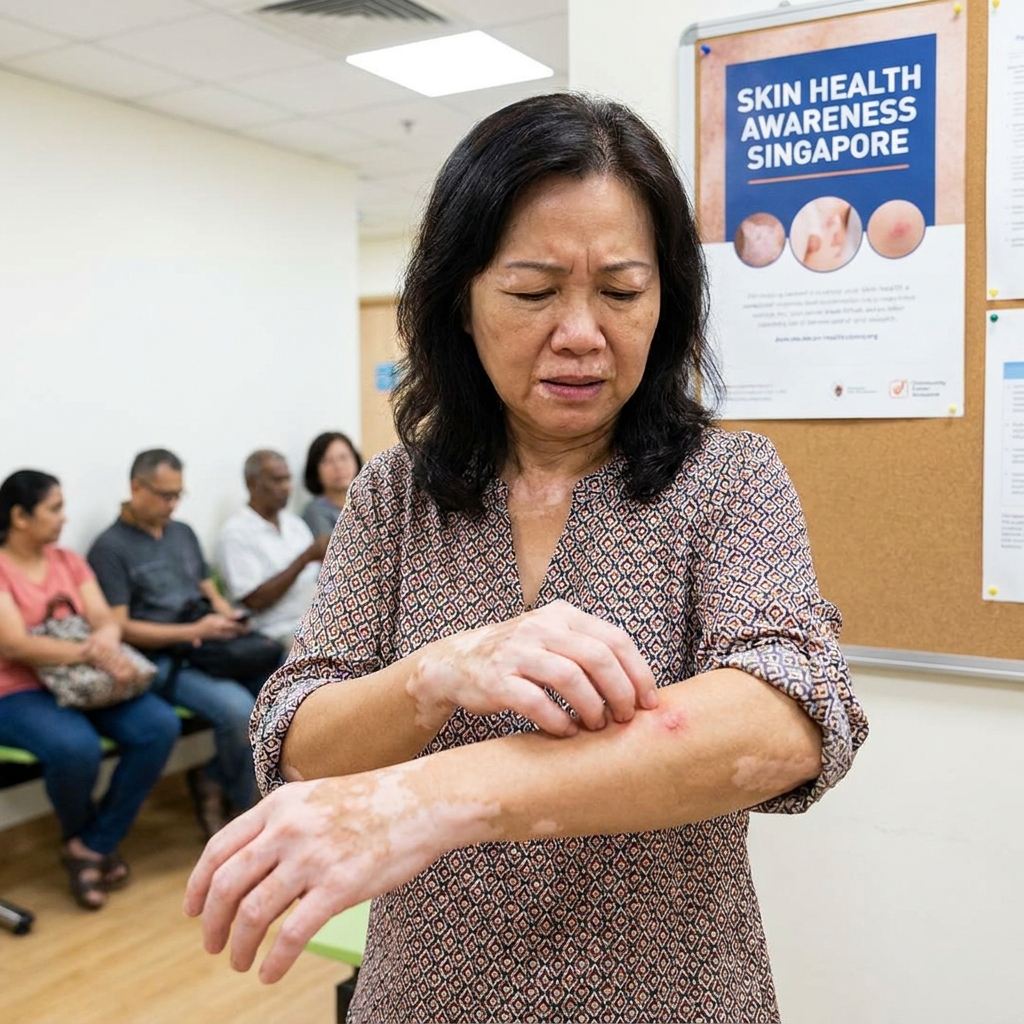
Ruxolitinib cream is generally safe to use, especially since it is applied to the skin and not taken orally. However, it is recommended to be aware of potential side effects:
No. Ruxolitinib cream is not commercially registered in Singapore and cannot be purchased at retail pharmacies. It is only available through the HSA’s Special Access Route, via a licensed dermatologist or specialist clinic.
Estimated costs are $300–$600+ per month, fully out-of-pocket. There are currently no government subsidies or standard insurance coverage for ruxolitinib in Singapore. Costs may vary depending on the volume dispensed and the clinic’s importation arrangements.
Clinical trials show that meaningful facial repigmentation typically begins at 24 weeks (6 months), with continued improvement up to 52 weeks and beyond. Body repigmentation tends to be slower than facial repigmentation. Patients should be prepared for a long-term commitment to treatment.
Combination therapy with narrowband UVB phototherapy and topical ruxolitinib is an area of active clinical interest and has been explored in some studies. Some dermatologists may consider this approach for patients with extensive or resistant vitiligo. Discuss this with your treating dermatologist.
This depends on HSA approval. Given the drug’s established regulatory approvals in the US and Europe, there is optimism that commercial registration in Singapore may follow.
The FDA-approved indication covers patients aged 12 years and older. Use in younger children has not been formally studied. Paediatric patients should be managed under specialist supervision, and the treating dermatologist will advise on suitability on a case-by-case basis.