
If you or a loved one has recently been diagnosed with vitiligo in Singapore, one of your immediate concerns is likely about the cost of treatment.
Vitiligo treatment costs will depend on the type of treatment needed and whether you obtain it from a public or private health provider. At public hospitals like the National Skin Centre or Singapore General Hospital, where services are subsidised for citizens and PRs, you may pay as little as $30–$80 per consultation.
Meanwhile, consultation at a private dermatology clinic could cost $150–$300, with separate expenses for specialised treatments such as narrowband UVB phototherapy or JAK inhibitor creams.
The costs of vitiligo treatment will be different depending on several factors:
Localised patches that do not spread can respond to basic topical therapy. However, larger or more widespread patches that are rapidly progressing may require more complex therapies, such as phototherapy.
Topical corticosteroids are relatively inexpensive, while newer treatments like JAK inhibitor creams (e.g. ruxolitinib) can have higher price points.
Vitiligo often requires sustained treatment over months or years. Even if a treatment is affordable on its own, the cost of multiple sessions or combination therapies adds up significantly over time.
Subsidised care at public hospitals can cost a fraction of the fees at private clinics.
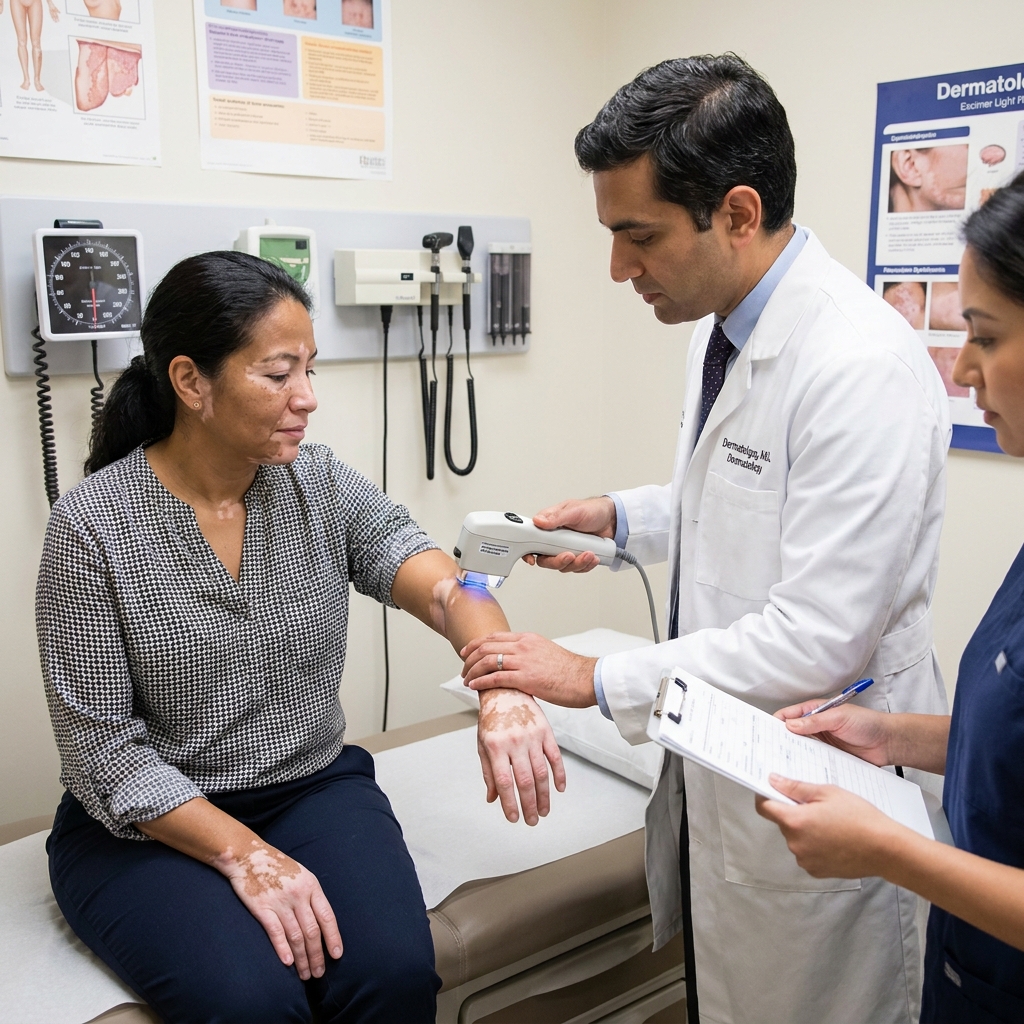
Phototherapy, for instance, is prescribed two to three times per week over a period of months, meaning frequent clinic visits.
Doctors may need to perform thyroid function tests, blood tests, and skin biopsies during initial diagnosis or as part of ongoing care.
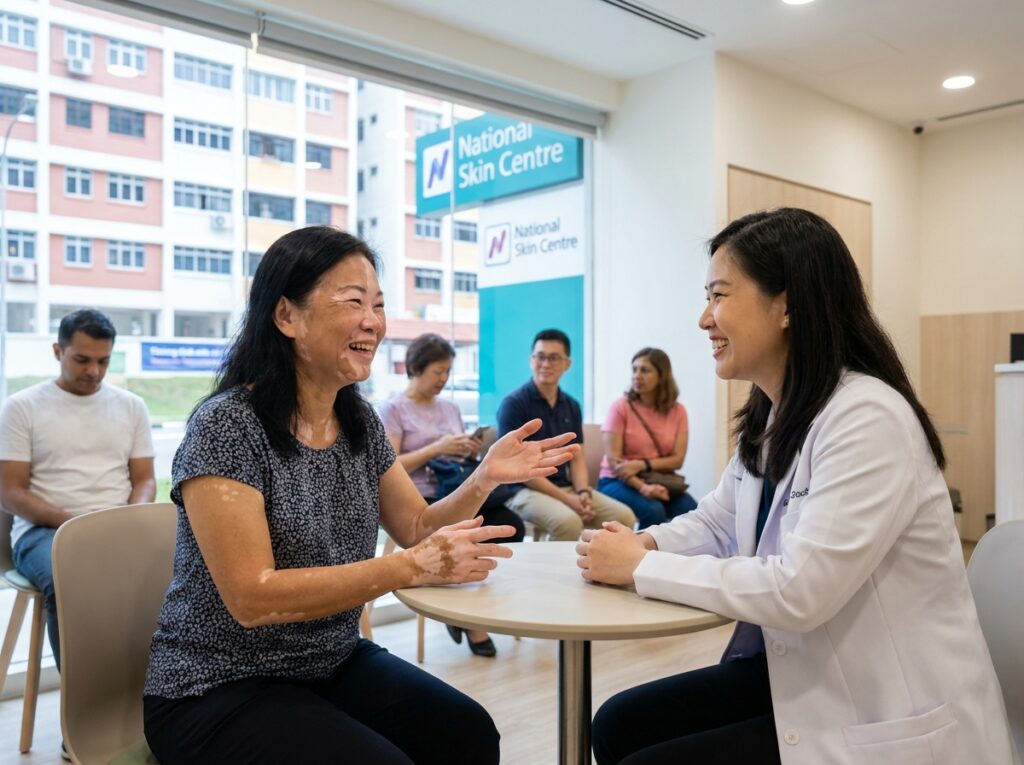
Public hospitals offer the most affordable access to vitiligo care in Singapore. Under the government subsidy framework, Singapore Citizens and Permanent Residents are eligible for subsidies of up to 65% for consultations and treatment.
The compromise for lower expenses at public hospitals is enduring longer waiting times. Initial appointments can take several weeks to months to be scheduled. However, for stable vitiligo cases where treatment needs are less urgent, the public health system is a highly affordable option.
Private dermatology clinics offer faster access to appointments. You can usually consult a dermatologist within days, but the costs will be significantly higher compared to public hospitals.
Some private clinics fall under Integrated Shield Plans coverage, which may allow partial insurance claims for inpatient or day-surgery procedures. Always confirm your policy terms with your insurance provider before committing to treatment.
Topical corticosteroids and calcineurin inhibitors, which can be applied to the skin of the affected area, are usually the first-line treatment for localised vitiligo. Options in Singapore include:
Narrowband UVB (NBUVB) phototherapy is considered one of the most effective treatments for widespread or treatment-resistant vitiligo. It requires the patient to have regular sessions weekly for several months at a time.
Both topical and oral JAK inhibitors have shown promising results in vitiligo treatment. These drugs work by regulating the immune pathways involved in the loss of skin pigmentation.
Ruxolitinib cream is a highly effective topical JAK inhibitor approved for the management of non-segmental vitiligo in the U.S. Oral JAK inhibitors, such as tofacitinib, baricitinib, and ruxolitinib pills, have also demonstrated positive outcomes in clinical studies.
Both topical and oral JAK inhibitors are not approved for vitiligo treatment in Singapore, and are not commercially available via standard channels. However, they may be accessible via the Special Access Programme (SAP) for select, eligible patients.
Surgery for vitiligo is reserved for cases that have not responded to other medical therapies. Procedures include skin grafting and transplanting melanocyte cells from unaffected skin to depigmented patches.
These are considered day surgery procedures in many cases, and can be partially offset under MediSave eligibility. The same operation in private clinics can range from $3,000 to $10,000+, depending on the procedure and area treated.
Managing the long-term cost of vitiligo treatment is possible with the right planning. Here are practical strategies to help ease the financial burden:
Seek care at public hospitals first, and take advantage of subsidised consultation and treatment rates.
Apply for CHAS (Community Health Assist Scheme), which allows lower-income and mid-income Singapore citizens to obtain subsidised treatment and medication at registered GP clinics.
Use MediSave for eligible day-surgery vitiligo procedures, which may be claimable up to approved limits.
Review your Integrated Shield Plan to see if it covers vitiligo-related hospitalisation and day surgery costs.
Ask your dermatologist about generic alternatives to topical medications, which are just as effective as branded versions but considerably cheaper.
Join the Vitiligo Support Group Singapore (VSG) to access community support, resources, and peer guidance on navigating the healthcare system cost-effectively.
Partial coverage may be available under Integrated Shield Plans, particularly for surgical or inpatient treatment. Routine consultations and topical treatments are usually out-of-pocket.
MediSave can be used for approved outpatient treatments at public hospitals and for day-surgery procedures. Routine consultations and topical prescriptions are generally not MediSave-claimable.
Vitiligo treatment is often a long-term commitment. Phototherapy courses run 4–6 months, and topical maintenance may continue for years. Costs do accumulate, which makes accessing subsidised public care or insurance coverage particularly important.
Currently, ruxolitinib cream is only available through the Special Access Programme and costs $300–$600+ per month. It is not yet covered under standard subsidies or most insurance plans. This may change as regulatory approvals progress.
Most patients are best served by starting at the National Skin Centre or their nearest public hospital’s dermatology department for subsidised access. Those who prefer faster access and can manage the higher cost may see a private dermatologist.